
Once your book is edited and ready to go, the next step is getting it into readers’ hands, and that means book reviews. Reviews play a critical role in book promotion, visibility, and credibility, especially for independent authors preparing for a launch or looking to build momentum.
There are many ways to get book reviews. Authors often reach out to creators and influencers on Instagram, TikTok, and blogs, or use services like BookSirens and BookFunnel. One option that consistently comes up for early and professional reviews is NetGalley.
This guide walks through how NetGalley works, how to use it through IBPA, what to prepare before submitting your book, and how NetGalley reviews can support your overall book launch and review strategy.
What Is NetGalley and How Does NetGalley Work?
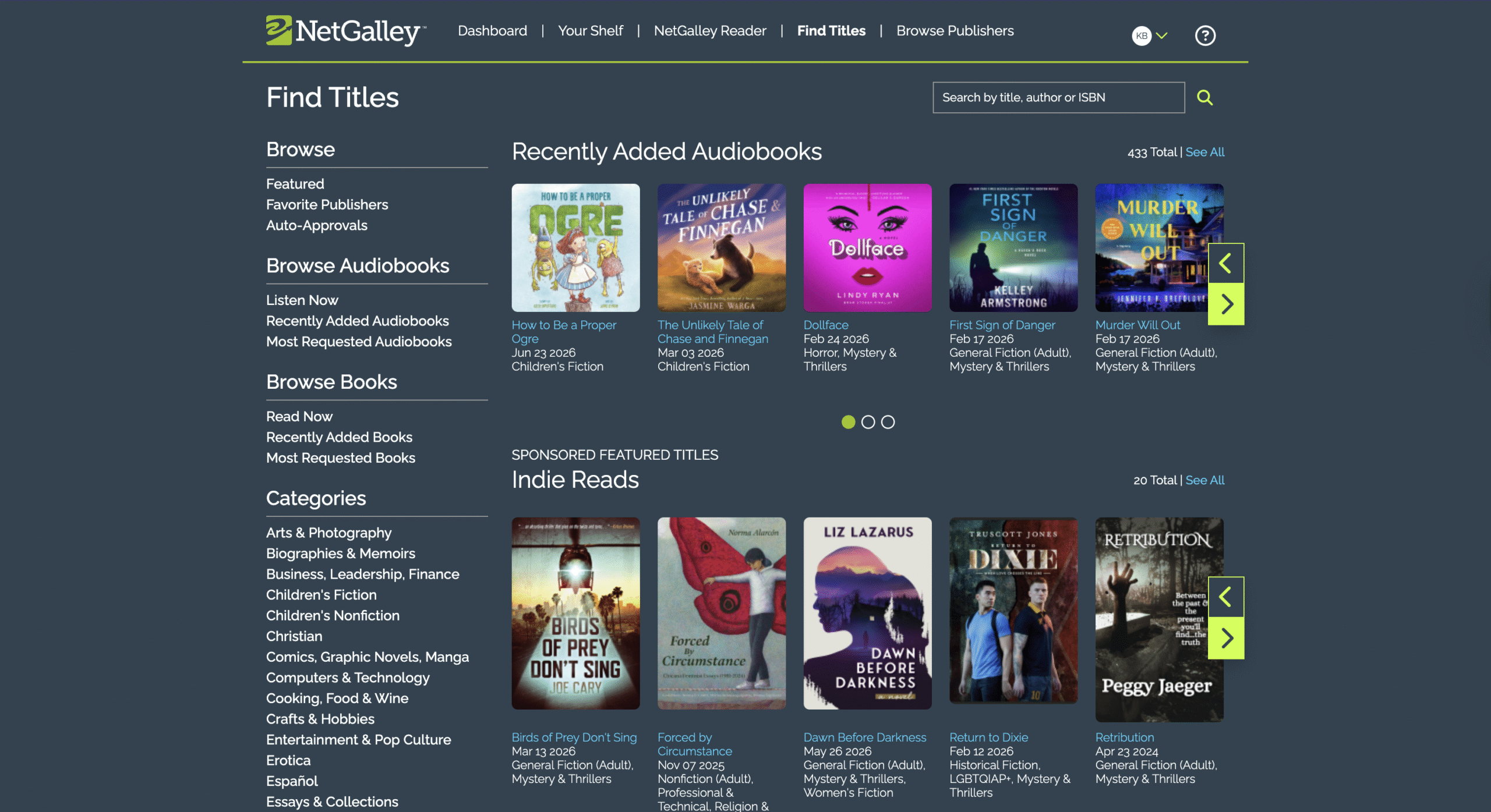
NetGalley is a professional book review platform used by librarians, bookstores, publishers, online creators, and professional reviewers to discover and review new titles. It is commonly used to distribute advance reader copies (ARCs) and collect early book reviews.
Rather than authors reaching out to reviewers one by one, NetGalley allows reviewers to browse available titles and request access based on their interests, genres, and reviewing history. Reviewers then choose where to leave feedback, which may include NetGalley itself, Goodreads, Amazon, StoryGraph, Fable, PageBound, or their own blogs.
NetGalley operates on a request-based system. Reviewers are expected to follow through on providing feedback, and their reviewer profile is affected if they consistently fail to submit reviews. This system encourages accountability, though reviews are not guaranteed.
For authors, NetGalley provides exposure to a large pool of reviewers who are actively looking for books to review. It removes the need to personally pitch or “beg” for reviews and centralizes access to readers who are already engaged in the review process.
NetGalley is most often used to gather early reviews before a book’s publication date, but it can also be used for books that are already published and need additional visibility and reviews.
Leverage IBPA for Discounted NetGalley Access
NetGalley can be expensive when managed directly. The standard self-managed NetGalley listing costs up to $575 for a 6 month listing, which may be out of reach for some independent authors.
One way to reduce this cost is by accessing the NetGalley Program through the Independent Book Publishers Association (IBPA). An IBPA membership costs approximately $155 per year and includes discounted access to a NetGalley program offered through their partnership.
Through IBPA, authors can choose a one-month, three-month, or six-month NetGalley listing. The three-month listing costs $299 and is not available through NetGalley directly. It is specific to the IBPA partnership.
When submitting through IBPA, they handle the setup of the NetGalley listing, including uploading files and configuring the book’s page. Authors do not manage the listing themselves, but IBPA provides support and communication throughout the process. Authors receive email notifications when reviews are submitted and can request reports on downloads and activity at regular intervals.
In addition to NetGalley access, IBPA membership includes other resources for independent authors, such as educational opportunities, workshops, and advertising options, though NetGalley is often one of the primary reasons authors join. You can find their other offerings here.
Why Use IBPA to List on NetGalley?
Using IBPA to access NetGalley simplifies the setup process for independent authors. Once the submission is complete, IBPA handles the technical work of creating and managing the NetGalley listing, including uploading files and configuring the book’s details.
Although authors do not have direct access to their NetGalley dashboard when submitting through IBPA, IBPA provides ongoing support.
Authors can request updates every couple of weeks on how many reviewers have downloaded the book, and they receive automatic email notifications whenever a review is completed.
If changes are needed—such as correcting an error in the manuscript or updating a file—IBPA’s team can make those updates on the author’s behalf. This allows authors to focus on preparation and promotion rather than managing the platform itself.
How to Prepare Your NetGalley ARC Listing and Increase Requests
Before submitting your book to NetGalley, it’s important that your materials are as complete and polished as possible. Reviewers are making decisions based on what they see in the listing, so preparation matters.
Your manuscript should be edited and ready for review. If you anticipate that minor proofreading errors may still exist, or want to give yourself a bit of grace for the pesky period you forgot in that sentence, you can add “Uncorrected Proof” to the front cover. This gives reviewers context and helps set expectations if they notice small issues.
Here are the main things to prepare for your listing.
- Strong book cover art: Reviewers often decide whether to click based on the cover alone. And in NetGalley, they can vote on covers they like.
A clear, compelling synopsis: The synopsis helps reviewers quickly understand the book and decide if it’s a good fit. - Complete book details: Including formats, publication date, publisher information, and website links helps reviewers assess the book at a glance.
- Accurate genre selection: Proper categorization ensures your book appears where the right reviewers are looking.
- Early praise or endorsements (if available): These can add context and credibility to the listing.
Also, it might do you well to create a pitch package and have it professionally reviewed before getting your NetGalley listing up.
When To Submit Your NetGalley ARC Listing
Timing plays an important role in getting the most out of a NetGalley listing. It’s recommended to list your book for reviews at least three to six months before your publication date. This allows time for reviewers to request the book, read it, and submit feedback before launch.
NetGalley reviews do not follow a fixed schedule. Some reviewers may submit feedback within days, while others may take weeks or even months. Reviews can continue to come in even after a listing has been archived.
Authors can also list books that are already published if they want to increase the number of reviews or improve visibility.
Because there is no guarantee of when—or if—a review will be submitted, listing early gives your book the best chance of collecting early reviews in time to cause a stir for launch and early promotion.
Where Do NetGalley Reviews Appear?
NetGalley reviews are not limited to the NetGalley platform itself. Reviewers choose where to post their feedback, depending on what works best for them.
Reviews may appear on:
- NetGalley
- Goodreads
- Amazon
- StoryGraph
- Fable
- PageBound
- Personal blogs or review websites
In some cases, reviewers will post on their own blogs and link back to the author’s website. When this happens, it can provide a backlink, which may help with online visibility.
Because reviewers post across multiple platforms, NetGalley reviews can support book promotion beyond a single site. Reviews that appear before launch can also help build early momentum, especially if they carry over to major reader platforms.
Authors do not control where reviews are posted, but NetGalley increases the chances that reviews will appear in multiple places without requiring additional outreach.
Reduce the Need to Chase Reviews
One of the biggest advantages of using NetGalley is that it removes the need to actively chase reviews. Instead of reaching out to reviewers one by one or repeatedly pitching your book, NetGalley allows reviewers to find and request titles on their own.
Listing NetGalley gives you access to a larger pool of reviewers including librarians, bookstore professionals, publishers, and online reviewers. They are already looking for books to review so requests come in through the platform without additional outreach from the author.
This approach saves time and energy, especially during an already busy stage of publishing. Rather than managing individual conversations or follow-ups, authors can rely on NetGalley to function as a centralized system for connecting books with reviewers.
NetGalley vs. Booksirens
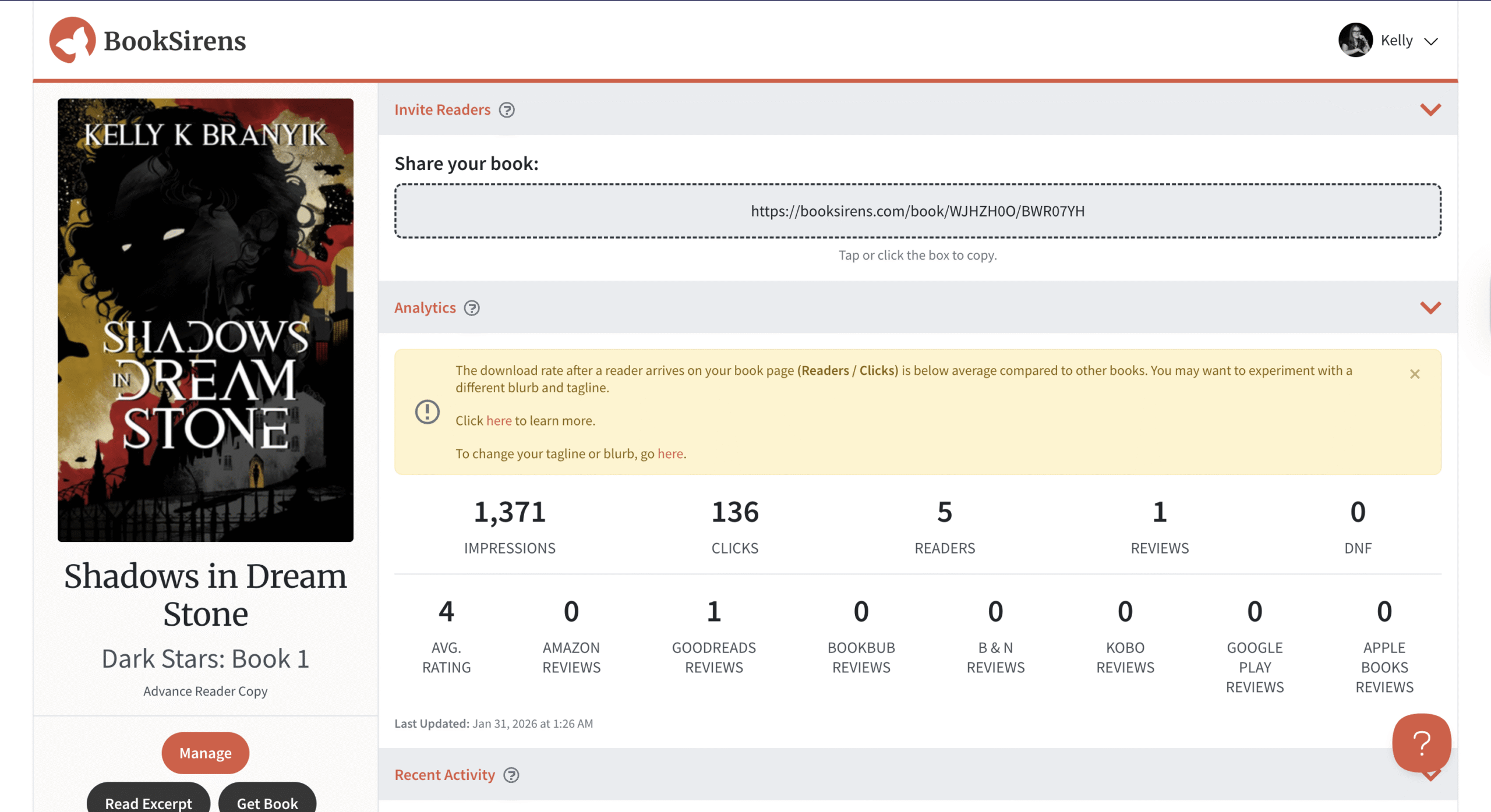
NetGalley is not the only option for getting book reviews, but it works differently from many alternatives. One commonly mentioned alternative is BookSirens.
With BookSirens, authors typically pay per review, whereas NetGalley operates on a time-based listing model. During the listing period, reviewers can continue to discover and request the book without additional cost per request.
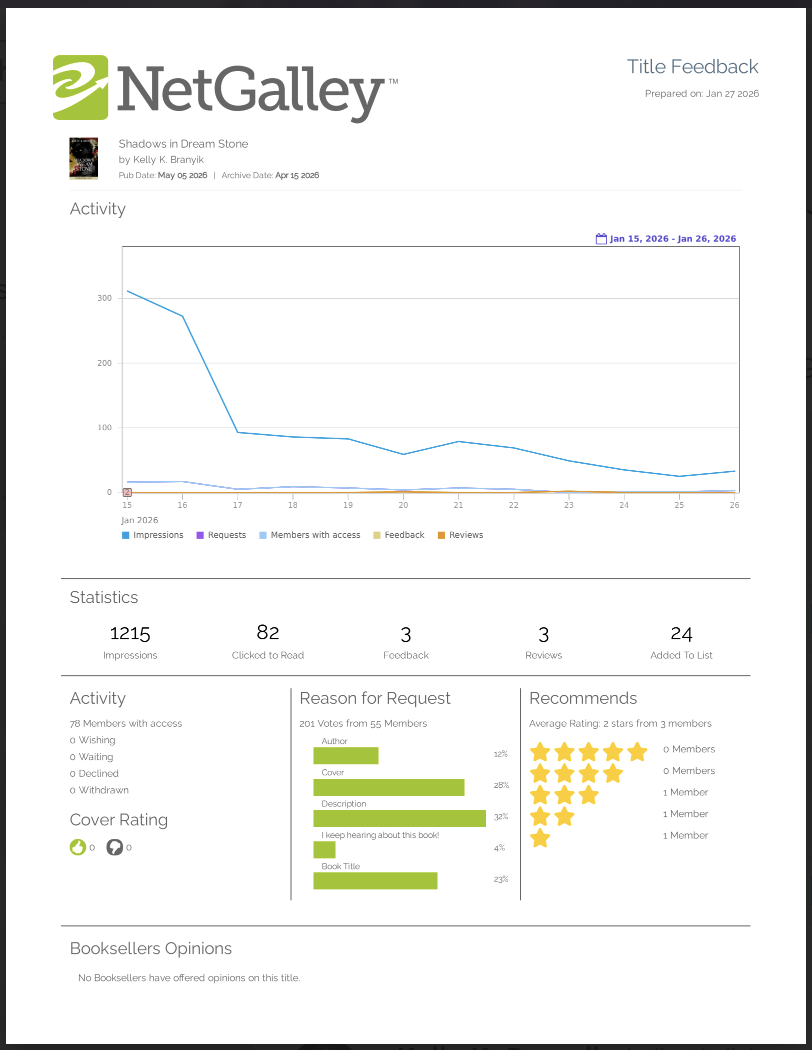
For example, I just listed my book on NetGalley through IBPA. Within the first two weeks, I got around 80 downloads. Booksirens charges either $100 for unlimited reviews, or $2 per review.
So why not just go with BookSirens, especially if it’s cheaper? Because NetGalley provides access to a broader range of reviewers, including librarians, bookstores, publishers, and professional reviewers. NetGalley can put your book in front of 600,000 reviewers.
BookSirens, on the other hand, gives you access to about 10,000.
If you get 100 NetGalley downloads in the first few weeks, that’s just $3 a download. And as you acquire more requests it becomes more cost effective.
While both options can be part of a review strategy, NetGalley offers broader visibility over a set period of time, rather than focusing on individual review transactions.
Get More Book Reviews Much Earlier
NetGalley is not a guarantee of reviews, but it is a way to increase exposure to a large, active pool of reviewers who are already looking for books to read and review.
For independent authors, NetGalley works best when it’s treated as part of a broader review and launch strategy. Listing early allows time for requests to come in, feedback to be submitted, and reviews to appear across multiple platforms. Because reviewers operate on their own timelines, earlier listings offer more flexibility.
For authors who prefer a centralized, hands-off approach to reaching reviewers, it can be a valuable tool either before launch or at any point after publication.